
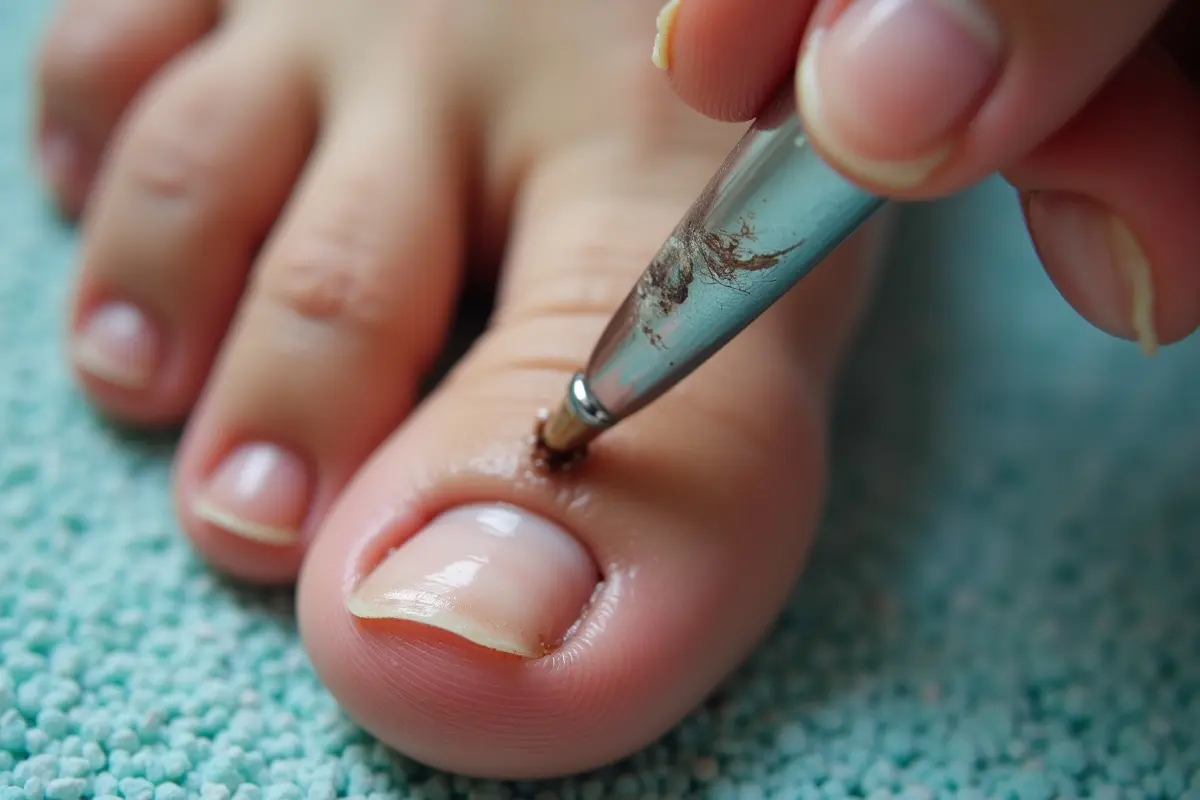
The Complete Guide to Restoring and Regenerating Damaged Toenails
An injured toenail has the potential to regrow from virtually anything – a fungal infection, injury, or a severe case of nail psoriasis – but only if you are treating the underlying condition and not just the part of the symptom that you get a glimpse of. The majority of people make a mistake in this aspect. They notice their toenails are thickening or yellowing; that’s all they think, reach for anything on the pharmacy counter, and question why nothing appears to happen.
Figure Out What You’re Actually Dealing With
Not all unsightly toenails have a fungal cause. Onychomycosis (the medical term for a fungal nail infection) is prevalent; it affects approximately 10% of adults but nearly 20% of people over 60 (Ghannoum et al., Journal of the American Academy of Dermatology, 2000). However, it presents with symptoms that are similar to several conditions that take an entirely different treatment route.
A subungual hematoma – a pool of blood under the nail from when you’ve stubbed your toe or your racing flats are too tight – looks dark and is sometimes confused for the fungal stain. It will grow itself out as the nail regenerates. Psoriasis of the nail causes pitting, thickening, and crumbling that is almost indistinguishable from fungus upon cursory examination – but since there is no fungus at work, antifungal treatment is ineffective. Nail separation (onycholysis) due to a fungus will also often look yeasty or like an infection and will also occur after trauma, aggressive pedicures, or on its own.
This is why playing the odds is a poor bet. If you’ve been treating psoriasis as a fungus for a year, you’ve lost a year. A real diagnosis, sometimes reinforced by sending a nail clipping to a lab, will let you know what you’re up against and whether the nail can even fully come back.
Why Fungal Nails Are So Hard To Shift
If the assumption was correct and the cause of the toenail infection was a fungus, then this is why the infection takes so long to clear up. Most toenail infections are caused by fungi (dermatophytes), in particular Trichophyton rubrum. These fungi do not merely infect the toenails but also hide beneath and within the nail plate, where they consume the keratin that the nail is composed of. The keratinolytic action of these organisms is believed to contribute to their ability to penetrate the nail and evade elimination by topical agents.
On top of that, the toenail’s growth rate can slow down therapeutic success. A toenail only grows around 1 to 1.5mm a month, and the time taken for an entire nail to be replaced is normally between 6 and 12 months, although this can be longer for the toenails on older or larger toes.
As the nail grows outward, it must be free of new fungal infection, and it may take at least 6 months before a clear section of the nail emerges. The new keratin produced as the nail grows out is constantly being used as sustenance by the fungus, and the infection is consequently being perpetuated.
What Actually Treats It
Oral antifungals are considered the most effective treatment for moderate-to-severe cases of onychomycosis. Terbinafine and itraconazole are the most commonly prescribed antifungal medications. Terbinafine is an allylamine medication that is taken in a pulse of 500 mg daily for 1 week during a month, whereas itraconazole, a triazole, is taken in a pulse of 200 mg twice daily for 1 week and is repeated once or twice with a 3-week interval.
The second pulse is usually taken within the fourth month of treatment. Cure rates with terbinafine are reported to be between 40% and 70% and with itraconazole between 38% and 78%, while recurrence rates after 1 year of treatment are 11% for terbinafine and 26% for itraconazole.
Laser and light-based therapies are also becoming increasingly popular and are being offered at some clinics. The evidence here is a bit more hit and miss – some patients do well and their nail infection clears or improves, but the results are not as consistently positive, or as well-documented in reputable sources of medical literature as oral antifungal therapy. Nevertheless, there may be a role for such therapy and it may offer growing hope for toenail fungus sufferers.
But this is not something for the worry-weary – it’s important for you to have your hopes managed, by understanding more about the limitations, risks and likely outcomes before rushing into shelling out for a course of treatments.
This is where seeing a specialist earns its keep. A podiatrist can confirm the diagnosis, prescribe or co-ordinate the right medication, and mechanically debride the nail: shaving down thickened, damaged tissue so both comfort and drug penetration improve dramatically. Getting proper fungus toenail treatment from someone who deals with this daily tends to save people months of trial and error compared to guessing at home. If you’ve got diabetes, poor circulation, or any condition that slows wound healing, that professional assessment stops being optional.
Reduced circulation and slower healing make even a small nail infection more likely to develop complications, and self-treatment carries more risk than most people realize.
Home Remedies: What’s Real And What’s Wishful Thinking
Many people suggest soaking your feet in vinegar, Vicks VapoRub, tea tree oil, or even applying toothpaste under the nail. While these home remedies may have mild antifungal or antimicrobial properties, none of them are proven to totally eradicate a fungal infection after it’s taken hold under your nail. In the best case, it might slow it down or make your nail smell nice. In the worst case, you’re lulled into a false sense of security while the fungus destroys your nail, making the treatment process more challenging and the damage more extensive.
If you want to try a soak alongside actual treatment, it’s not going to hurt much. Just don’t mistake it for treatment.
The Regrowth Timeline, And Why Patience Matters More Than Anything
This is the explanation that tends to disillusion people the most but: a new nail, formed in the nail matrix at your cuticle, requires a clean bed to grow over. This means that bed of old, diseased keratin has to slough off to reveal fresh, nail-bed skin. Your nail matrix is a fixed factory for new nail cells at your nail base; it doesn’t work faster because you turn the heat up on it or anything. Your nail plate is its product and your nail bed is the conveyor belt that shoves old production out, and in the case of fungus treatment it needs to.
So even a perfectly executed course of oral antifungals doesn’t produce a clean nail the next week. It clears the infection so the new nail growing in from the matrix comes in healthy. The damaged, discolored portion still has to grow out and get trimmed away as it goes, which is why podiatric debridement during this window matters so much – it keeps the visible nail manageable and lets you actually see progress instead of staring at the same ugly nail for a year wondering if the treatment is working.
Expect the full process, from starting treatment to having an entirely new, clear nail, to take somewhere between six months and a year. Big toenails, being slower growers, often sit at the longer end of that range. Anyone promising a faster fix is selling something.
Stopping Reinfection Before It Starts
It’s not enough to just get rid of the fungus. Fungal spores can be found in your shoes, socks, and on the floor of communal showers as well as in nail salon instruments. They remain viable and can re-infect you even after the new nail has grown in. If you don’t take steps to kill the fungus in your environment and prevent its return, there’s a high likelihood that you’ll be seeing it again within six to twelve months.
Try to rotate your shoes so they have a chance to air out. Wash and dry your socks at the hottest possible setting. For those that you wear most often, like sneakers and work boots, almost consider using an antifungal spray or UV shoe sanitizer. Shower shoes in the gym or at the pool are also a good idea. Make sure that your nail salon sterilizes instruments between customers, or you can bring your own.
General Habits That Support Healthy Regrowth
In addition to care geared towards fungus, there are some standard nail habits that are well worth getting into whether you’re an athlete or not. Trim nails straight across rather than rounding the corners, as this minimizes the chance of an ingrown nail while the still-fragile nail is growing back. Moisturize the cuticle and the skin around the nail often – a dry, cracked nail bed heals painfully slowly and is more liable to get damaged further.
People tend to underestimate just how much the right (or wrong) shoe can affect a healing nail. If your shoes are frequently too narrow or short, you’re unnecessarily squashing the nail with every step and effectively undoing a week or two of delicate, careful regrowth. If you’re an athlete, wear properly fitting socks (non-chafing fibres!) and shoes and get right on top of any subungual hematoma or trauma before it becomes an occasional sharp pain just hanging out under your nail.
Biotin is inevitable as a supplement with nail health, specifically nail regrowth after a fungal infection. The skinny: the evidence for biotin doing a great deal for nail strength is pretty weak, and it sure doesn’t work to treat the active fungal infection. It’s not harmful, but you shouldn’t rely on it as anything more than an adjunct to real treatment and regular debridement.
When To Stop Waiting And See Someone
There are a few instances in which you should be seen sooner rather than later. Pain, redness, swelling, or discharge around the nail are actually signs that bacteria (not just fungus) may be present, and likely warrant prompt evaluation. And if you have diabetes, are immunocompromised, or have peripheral vascular disease, you should be seen right away, as even a minor infection can lead to a more serious complication more quickly than it would in someone with normal circulation and immunity.
Finally, if you’ve been treating a toenail for several months and haven’t seen any improvement, it’s likely a good idea to check in with a doctor to re-evaluate your treatment, diagnosis, or dosage – not simply keep plugging away with the same setup.
A damaged toenail can absolutely come back to normal. It just needs the right diagnosis, treatment matched to the actual cause, and enough months for biology to do its slow, unglamorous work. Skip any of those three and you’ll be back where you started, just with a longer, more frustrating story to tell about it.