
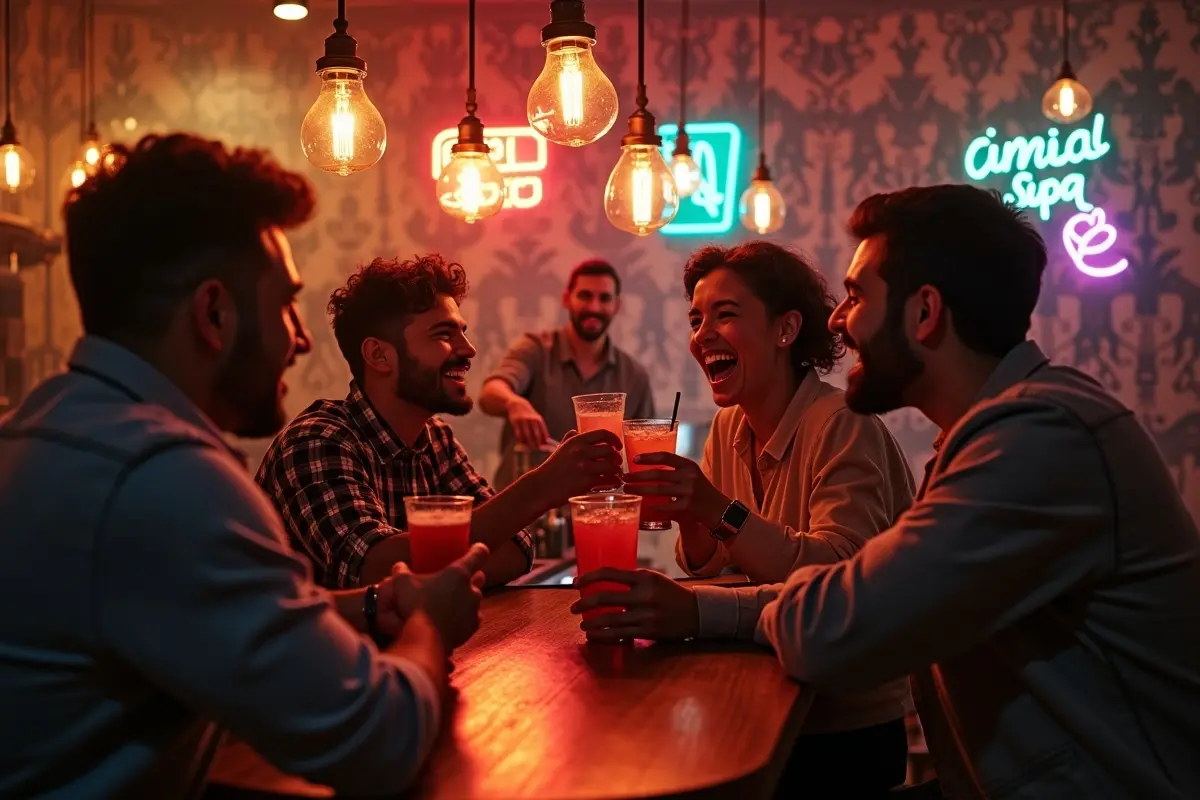
How Themed Bars are Redefining the Standard Night Out
The standard bar model: drinks menu, stools, background music, still exists, but it’s losing ground fast. Modern consumers aren’t just buying a drink; they’re buying a story to tell afterward. Themed bars understood this shift before most operators did, and in competitive markets like London, that understanding is now the difference between a packed house and empty seats.
Contents
Beyond Kitsch: Production Value is the Real Separator
The early wave of themed bars had a reputation problem. Novelty made over substance. Cheap props nailed to walls, a playlist nobody curated, and cocktails that hadn’t changed since the venue opened. Those places still exist, but they’re not the ones drawing queues.
What’s changed is the production standard. Successful themed venues now approach their spaces like film sets. Lighting rigs, custom furniture, period-accurate memorabilia, staff uniforms that hold the world together rather than undercut it. Every sensory detail, what you hear when you walk in, what the menus feel like in your hands, what the glassware looks like, is chosen to maintain the environment rather than break it.
This is total immersion, and it requires real investment. The bars getting it right aren’t doing themed as a shortcut. They’re doing it as a discipline.
Why Nostalgia is Doing the Heavy Lifting Right Now
The sensory assault of it all, from the smell of dry ice from this precise strobe machine, to the wild looks in every booth, will make you forget what else is going on in your day. We may be spiralling into a black hole of endless nostalgia, but sometimes that feels like a good thing. London’s West End is particularly good at leaning into this. In Covent Garden, which has always been a district where hospitality concepts compete hard for attention, you’ll find venues that have built entire identities around that era. The 90s cocktail bar in covent garden model works here because the area attracts exactly the mix of people, tourists, locals, post-work groups, who want something with energy and personality rather than just proximity to a tube station.
The Menu as Narrative
A special cocktail menu based on a theme is more than just a normal menu wrapped in a different cover. In the best places, the beverages are an essential part of the entire concept. This means you have to use ingredients that connect to the theme’s location or period in history, the drinks’ appearance should be a clear reference to something tangible, if possible the names should make sense if guests get the reference.
78% of millennials would rather spend money on a desirable experience or event than buy a physical product (Eventbrite). A signature serve that arrives in an unusual vessel, garnished with something that tells a small story, photographs well, and tastes genuinely good, that’s the drink doing multiple jobs simultaneously. It’s hospitality, theatre, and social content in one glass.
Mixology quality can’t be less just because the room is carrying all the visual weight. Theme bars that rely on gimmick drinks with poor quality won’t see customers coming back. The gimmick invites people in; quality ensures their return.
Theatrical Service Without Amateur Theatre
The success of themed venues ultimately depends on their staff. For instance, a bartender truly immersed in the world they are part of is completely different from someone who has been made to put on a costume which they are ashamed of.
The establishments that manage to perfect the service aspect, recruit employees based on their character in addition to their expertise. The employees are not simply expected to act in a way that feels unnatural, they’re hosts who by chance are familiar enough with the theme to expertly discuss it, offer appropriate recommendations, and sense whether a group wishes to play into the experience, or casually enjoy their drinks with a little privacy.
In a nutshell, this is like being in a theater. It ensures the fantasy experience for the guest isn’t ruined by someone breaking character because they are unaware of certain details such as the year a certain track was released. The authentic environment is maintained because everyone in it is authentic.
Winning in a Saturated Market
There are so many bars in Covent Garden that a weak concept will be shut six months to a year after opening. The themed bars that cling on in notoriously tough areas do so because they’ve realized the ‘theme’ isn’t the product, it’s the container for what is often an excellent hospitality operation.
That means guaranteed good-quality drinks, genuinely competent staff, a booking system that doesn’t make people tear their hair out before they even arrive, and a physical space that doesn’t look too elaborate on a quiet Tuesday because it’s heaving on a Friday. The gimmick might catch the first visit. But none of the rest of it works without the basics underneath.
The standard night out isn’t dead. It’s just being out-competed by venues willing to offer more than a room with alcohol in it.